Wednesday, 4 January 2012

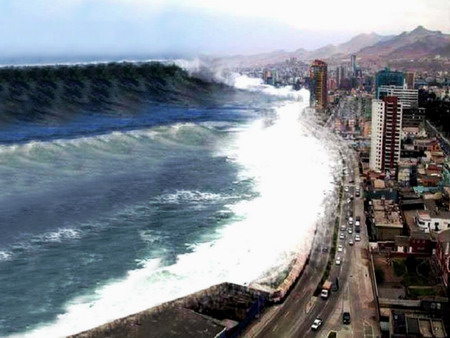
'The Day the wave came' Tsunami Documentary

Narrative Structure
The narrorator was a male voiceover.


Archive Material
-Footage of the tsunami.
-Footage of the tide going out.
-Earthquake , hand held camera.
-houses being taken down by the rushing water.


Editing
- Cut aways from a persons interview to the archive material.
- Real foortage to a fade in image of an animated image.
- People in the interviews either positioned to the left or right.
-Logo - Journeyman.tv
-Fading, an image of an amintated earth is on the screen when a picture of how they believe the tsunami started fades over the top of it.


Sound
- Birds.
- Wind.
- The sea.
- Screaming.
- People talking in the background.
- Music in the background of some interviews, music which sounded like a heartbeat.


Camerawork
- Close up of people's faces who were being interviewed about the tsunami, with a high key lighting on the people being interviews faces and all the rest of the shot in a low key lighting.
- Establishing shot of the place.
- Birds eye view of the place and the damage caused by the tsunami.


Graphics
- Black backgroud whilst people being interview'd.
- Subtitles at the bottom of the screen for when the foreign people are being interviewd.
- Animated images of how the tsunami happened.

The Meth Epedmic

Themes
Drugs - discusses how it was being made, how many people was doing it and how it became out of control.
Society.
Narrative Structure
Peer Preussure - Many people were infuenced by it and a lot of people who knew people who had took it could of been peer pressured into doing it.
Addiction - Once doing the drug it became an addiction.
Crime - It was illegal to sell or buy the drug.

Narrative Structure
The narratice structure for the meth epedemic documentary was linear. This means it was done from the start and did it in the order of what happened.

Camera Work
-Zoom in of man talking.
-Shot of badge that the police was wearing.
-Birds eye view shot of where the crystal meth was being used and sold.
-Close up of drugs
-Nightvision camerawork on the army.
-Worms eye view of the sky.
-Close up/extreme close up of the pills being put in bags.
-Pan shot inside a house where crystal meth had been taken, house was a mess, rubbish everywhere.
-Shots of planes.
-A pan up and down was used in one of the interviews to show a full shot of the people who were taking meth. This was showing what the drug had done to the person who had took it and how they had been affected.

Sound
-Documentary intoduced by narrartor reading out the title of the documentary, this gives the audience an idea of what the documentary is going to be about.
-Narrator - the voiceover helps the audience understand what is going on and make it for the audience easier to understand. The narrarotor helps with explaining things such as statistics and where the drug was being taken and sold and so on.
-Police sirens, this is when the people who have been doing or selling meth are being arrested.
-Explosions
-Interviews
-Upbeat music
-Quiet music in background when the images of people who have taken the drug come on.

Editing
Cut aways of people who have the drug
Blurred out peoples faces
Disolves from a picture of a person before taking the drug to a picture of them after taking the drug.
Fast motion of pills - close up/extreme close up of them putting them in the bags.
Laptop shot blurred in the background.
On some cut aways they were cut aways from statatistics on crystal meth to pie charts and graphs on the increase in meth use, this was explained by the narrartor so the audience knew what was going on and so it was easily understood.

Archive Material
-Shows real footage of the peoples houses who have consumed the drug or sold the drug. The houses were messy with rubbish everywhere.
-Footage from a helicopter.
-Footage of a real hosue raid by the police.

Graphics
Red background titles
In the corner of the screen it says 'frontline,' this is the logo for who produced the documentary.
Bar charts and graphs showing the rise of people taking meth.
The music biz - Meatloaf

Themes
Propaganda
Music
Fame
It showed meatloafs fame and success within the music industury and told the audience how meatloaf became famous from the start.

Narrative Structure
Linea.
Open ended (no complete answer at the end of the documentary)
It showed how meatloafs career started from the beginning to now.

Camera Work
Establishing shot of meatloaf in concert.
Close up of meatloafs long detailed finger nails.
Extreme close up of meatloafs make up.
Establishing shot of HMV to show where the albums were sold.
Cutaways.
Framing to left or right.
Medium close up/ close up during interviews.
Pan shot of press conference.
Within this documentary a handheld camera is used.
Handheld camera footage.

Mise-en-scene
Blue screen.
Woods.
Concert.
Office.
Within most of the interviews in the documentary the background of the interview is mostly in the recording studio.

Sound
Talking
Meatloafs songs playing in the background.
Dialogue- Music and buisness.
Narrator is a male voice.

Editing
Cutaways are used throughout.
Slow motion shots of band.
Slow motion of fans reactions.

Archive Material
Footage of previous concerts.
Footage of filming the music video.
Footage of oress conferences.
Newspaper articles.
Footage of Brit awards.

Graphics
Red and white colouring is used throughout the documentary.
Titles at the bottom of the screen to show who the person being interviewed is.
Still imagery when there is an interview.


'The devil made me do it'

Themes
Christianity - rebelling against christianity.
Crime and punishment - the three girls who attacked the nun.
Worshiping the devil,
Youth - the influence of young people
Good vs evil - Devil vs the nun perhaps.
Influenced through music - Maryln Manson.

Narrative structure
Linia, evidence of some flash backs which makes it epic narrative.

Camerawork
Establishing shots of the crowds in concerts - how many people are influenced by the music Maryln Manson sung. Aswell as there being establishing shots of the crowds at the concerts there was handheld footage of the concert - this would show the audience what it was like and how young people had been influened by Marlyn Manson with his music and the way he looked and acted. There are also many other establishing shots showing the setting and place, for example in this documentary it was set in a village. Because it was done in a small village it didnt make it seem realistic as it seemed unreal what the three young girls had done to the nun in this documentary.
Rule of thirds.
Hand held camera footage.
Close ups of the people being interviewed.
Point of view shots.

Mise-en-scene
Showing teenagers in bedroom relaxing, scenery on remote mountains from a train, showed manson fans in full make up and costumes, symbolic imagery, black being represented.

Sound
Plays Marlyn Manson drug related songs throughout the documentary, for example the footage of the Marlyn Manson concert.
Narrators of the documentary.
Religious songs played when showing the funeral for the nun.
Re-enacments of screams and other sounds to fit in with the documentary, trying to make it easier for the audience to understand what actually happened. This also makes it more scary, for example when watching the documentary you feel sorry for the nun and its scary to think about the pain she went through, and hearing all these violent noises makes it more understandable and real.
When it said about the nun being murdered it went from quiet music which slowly got louder and louder until the death of the nun when the music cut straight off.

Archive Material
Maryln Manroe press conference asking about the murder

Editing
At points of the documentary the narraror was talking over the images/clips.
Cutaways.

'That thing Lara Croft'

Themes
Violence - Shows Lara Croft shooting animals and people within the game, carrying guns on her side.
Representation of women - Making her strong and undistructable, strong character. Opposite to how women are usually represented.
feminism - Strong gender.
Gaming - playstation game and computer game, shows people, maily males playing on the game.
Influence of male audience - eye candy, influence of women audience - powerful

Narrative Structure
Presence of a narrator, evouloution (boob job), Disjointed, Linear, Chronilogical storyline.

Camerawork
Canted angle of person on the screen of the laptop.
Medium close ups and extreme close ups of the people being interviewed, this shows their facial expressions and gives the audience an idea of what they are feeling.
Shot frames of the game footage then went to the person on game.

Mise-en-scene
Guys all playing together, male audience, game played on mass, interviews, people moved left to right, props - computer and mice.

Sound
Music from the game (lara croft theme music)
Lara's voice, shows the audience what the character is like.
Guns from game, fighting, parts of the game.
Voiceover on the documentary was a male.
Quiet music in the background when the game was being played by people on the documentary.

Editing
Fast forward - footage was sped up on one part of the documentary, this is too fasten things up, maybe the less important bits.
Blurred image of the 'Lara Croft' game whilst person was talking.
Match on action shot.
Straight cuts all the way through, for example there was cut aways from interviews where it would cut to either a image or short clip of the game, this was when they were discussing parts of the game which would relate to the image or short clip of the game.
Fading - this was used when comparing Lara Croft up against Angelina Jolie, this was done by showing an image of Lara Croft and it fading into a picture of Angelina Jolie.

Archive Material
Game of lara croft.
Clips of the film lara croft which included Angelina Jolie.
Angelina jolie interview/opinions.
Front covers of magazines showing Lara Croft and how big it had became.


Editing Diary

Week One
In the first week of editing we put all our tapes of the filming we had done and put them on the computer, from this we cut the shots down for what we wanted to use and then deleted the cuts of filming we didn't want to use, this was then put on the shot decision list.
In the first week we captured going to blaackpool and having an interview with a fortune teller and shots and cut aways of blackpool, the tea leave interview and extra additional shots that could be put into the opening of our documentary.
We then put all of our footage into a brief chronoligcal time lime, of introduction, Blackpool footage, and Tealeaves so we got the outline of the Documentry. We then began to start from the begining and work our way through editing.
For our opening we wanted to create an eary atmopsehre involving a montage of different related images to do with the supernatural, that can create this mood for our docuemntry. We included things such as old books, candels, old signs and posters and dreamcatchers, footage from blackpool and addtional footage we captured for just the opening sequence. We edited the opening by using the images we planned to film, and editing them into black and white, to give an old authetntic look. We did research alot of Adobe premiere Tutorials becuase we wanted to create an old like film effect however, we could find one that created the correct atmospehre we were lookign for so we settled for black and white, as it is simple, authentic and not over edited. Transitions we used in the opening were dip to black and cross fade, these were mostly popular to use i think becuase they were very simple however helped the docuekmentry flow and fluent. Other editiong we used throuhgout our editing was a reverse speed shot, we decided to use it as it looked good and made our documentary look more eary and mysterious how we wanted to.
At the end of this week we captured an interview with 'Lucy Bate' a girl who has claimed to see and have a paranormal expeirence. As we had captured on the timeline, and there were alot of takes we felt we could be orginaised by cutting down the itnerview to the itnresting parts, and start to add in our cutaways that we had planned for this itnerview. Therefore we had sucessfully created one interview and the opening sequence by the end of the week.
However as we didn't have enough time in lesson to edit our opening to our documentary we came back in our own time when we were free in order to have extra time to edit and make our documentary to the best we could. A girl in my group came back when she was free on her own and spent two hours on cleaning the documentary up and added graphics and titles/subtitles.

Week two
In this week we carried on editing our documentary and finished piecing all the sections together. We cut down the tea leave interview, to get the itnresting bits and then added in the nessearcy cutaways that were needed. Ensuring that the tea leave interview fufilled all the codes and conventions needed, using cutaways, rule of thirds, and graphics. We then began to start from the openign sequence and peice evrything together working on each section at a time. We began to work on the blackpoool section. This was a challenge because we needed to use all of our establishing shots, to fit the narration needed and the introduce the interview with the fortune teller however because the fortune teller wasnt much of a sucess due to the sound of the interview. We tried to fiddle around with the audio to try and get rid of the hard abcground noise however it was a challenge, it does sound abit better however we still believe it is really low quality. Also within week two I started to design and edit the print advert. We spent some of our time editing different things so we could get more done and have our documentary, radio advert and print advert done on time.

Week three
At the start of week three we started to edit the narration for our documentary and our radio advert. At first we asked a woman to be the narrratoor for our documentary and radio advert however when we listened to it with our documentary her voice didn't sound right, she didn't give enough ethusiasm and sounded quite dull, we believed we could find someone better suited to do the narration for our documentary, so we decided to change the person who narrated our documentary and radio advert and went with a girl in the drama department, she was very enthusiastic and sounded good for our documentary. In the middle of this week we put the voice/narration together with the documentary. We also finished our print advert.


Week four and week 5
In week four and five we put the finishing touches together to finish our documentary. We finished cutting it down and getting it to the correct time of five minutes and placed all the pieces together to get our final piece. We put the music onto the documentary and added our names and candiate numbers to the start of our documentary.

Location Sheets